
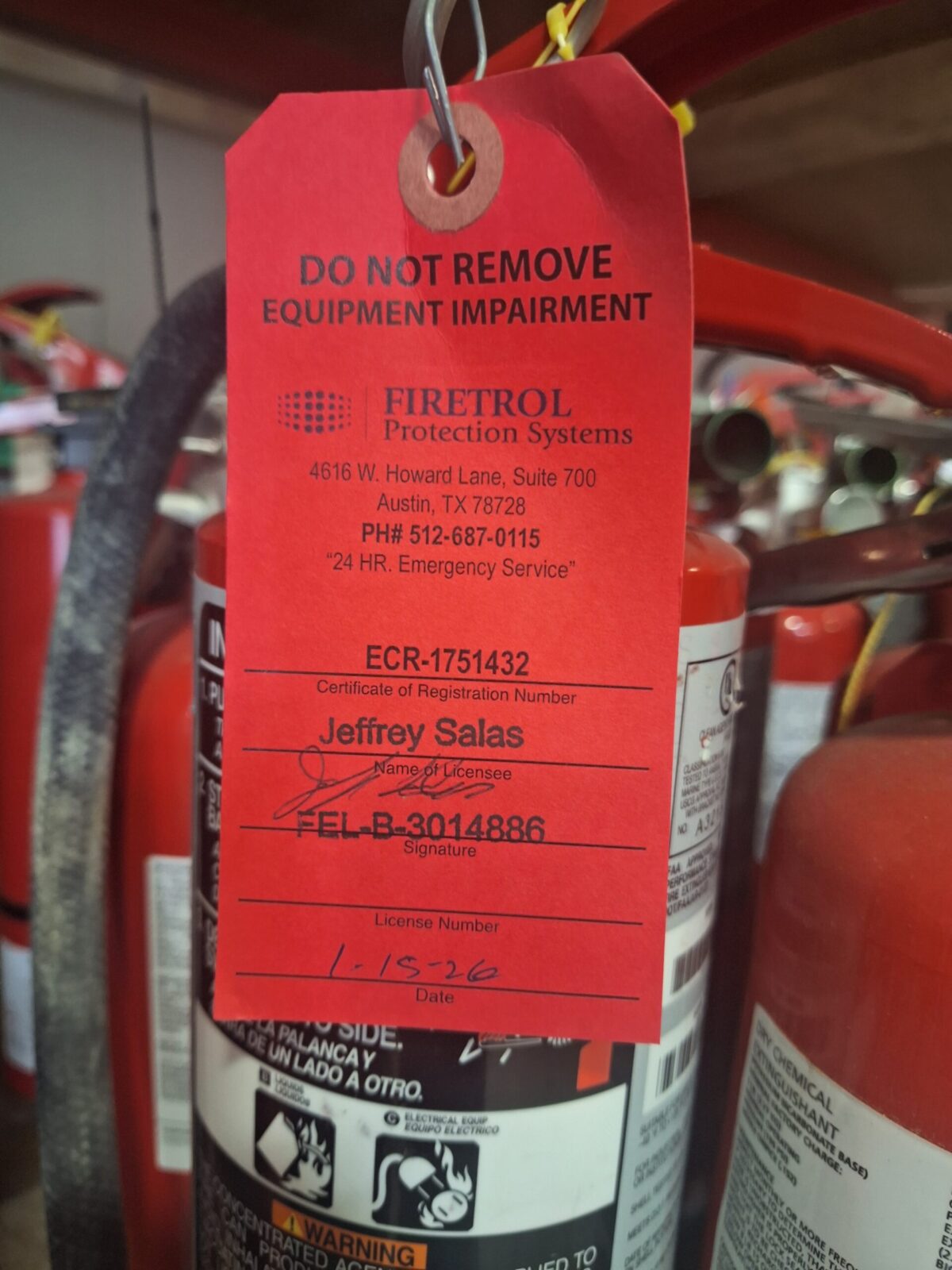
Did you walk into your fire riser room today and see a bright red tag? Did it make your heart skip a beat? If you saw a yellow tag, you probably feel tempted to ignore it. Spoiler alert, you shouldn’t.
As a local life safety professional, I talk to stressed out property managers just about every single day. Whether your managing a historic music venue on 6th Street or a sprawling distribution center near the airport, the color of that tag dictates your next 24 hours. The inspection tags aren’t just a piece of paper. They act as a legal notification regarding the status of your life safety systems. The fire marshals rely on them in order to be able to spot issues. When a red tag is issue, by code it must be reported to the fire department by the company who issues it. Ignoring these tags can risk an immediate shutdown by the Austin Fire Department (AFD). Not to mention that, you risk denied insurance claims if a disaster does occur.
Here is the no-nonsense breakdown of what those tags mean and how to get back to green.
The Red Tag: Immediate Impairment (The “Drop Everything” Scenario)
A red tag means your system remains actively impaired. It is not functioning as designed. Therefore, in the eyes of the International Fire Code (IFC) and NFPA standards, your building is currently unprotected.
What Usually Triggers a Red Tag in Austin?
- Freeze Breaks: Severe winter storms commonly burst pipes, rendering the entire sprinkler system useless.
- Pump Failure: Your primary fire pump fails to start automatically during a test.
- Panel Death: Your fire alarm panel goes completely dead or shows a critical communication failure.
The Consequence: Mandatory Fire Watch
In Austin, a red tag often triggers a mandatory fire watch. This means that you must pay personnel to physically patrol the building 24/7 until the system is fixed. If a fire occurs while a red tag remains active, your liability exposure is massive. If the Fire Marshal stops by and you don’t have your fire watch logs, they have the authority to evacuate everyone and close your building entirely.
The Yellow Tag: Non-Compliance (The “Ticking Time Bomb”)
A yellow tag indicates non-compliance. Your system might still work technically, but it doesn’t meet current codes, or there is a specific component that has failed a routine inspection.
Common Austin Scenarios:
- The Domain & New Construction: Contractors frequently spray paint over sprinkler heads or obstruct them during new tenant finish-outs.
- Downtown & East Austin: Older buildings frequently miss their mandatory 5-year internal pipe inspections.
- Batteries: The backup batteries inside your fire alarm panel pass their expiration date.
The Danger of Waiting Property managers often ignore yellow tags because the system still appears functional. This is a massive mistake. A neglected maintenance issue eventually causes a total system failure. If your insurance carrier sees a yellow tag during an audit, they’ll use it as an excuse to raise premiums. Once the AFD inspectors issue violation notices, they come with strict deadlines. If you miss that deadline, then expect to be making a contribution to this year’s annual fireman’s ball.
The Goal: Getting the Green Tag
A green tag (or in Austin it’s sometimes a blue tag) serves as concrete proof of compliance. It confirms that technician have inspected and maintained your system perfectly. Specifically, it tells the Fire Marshal and your insurance carrier that the building adheres to NFPA 72 and NFPA 25 standards. It demonstrates that you are doing everything that you can to take fire safety seriously.
Getting a green tag requires a comprehensive inspection. Our technicians have to test fire alarm pull stations and smoke detectors. Then, we check sprinkler water pressure, flow switches, and control valves. Finally, we verify extinguisher pressure gauges and hydro-test dates.
Pro Tip: Check the manufacture date stamped on your fire extinguishers. If they are older than 12 years, they require a mandatory 12-year hydrostatic test. Often times, buying a brand-new extinguisher is cheaper than paying for the labor to test the old one.
Why Austin Regulations Are Different
Navigating Austin Fire Department compliance can be tricky. Local amendments to the IFC are often much stricter than national standards. For example, high-rise towers downtown face rigorous stairwell pressurization testing.
Furthermore, standard Austin codes don’t always apply in the suburbs. Round Rock and Pflugerville rely on local Emergency Services Districts (ESDs). That means that these districts utilize different submission portals and unique reporting timelines. It’s important to have a partner who knows exactly which jurisdiction governs your specific building.
How We Fix It
We don’t just point out problems, we engineer solutions. We provide a single point of contact for your entire life safety ecosystem. From certifying your panel to replacing massive diesel fire pumps, we handle it all.
5 Frequently Asked Questions About Fire Inspection Tags
- What does a red tag on a fire sprinkler system mean? A red tag indicates immediate system impairment. Specifically, your building currently lacks functional fire protection. The local fire marshal will likely mandate a highly expensive 24/7 fire watch until you finish repairs.
- Can I ignore a yellow fire inspection tag? No, you absolutely cannot ignore it. A yellow tag indicates non-compliance with the current fire code. Ignoring the warning eventually leads to massive municipal fines, denied insurance claims, and total system failures.
- How do I get a green fire inspection tag in Austin? You must hire a licensed fire protection contractor. Specifically, they must perform a comprehensive inspection of your alarms, sprinklers, and extinguishers. Once every device passes, they will issue a compliant green tag.
- What triggers a mandatory fire watch in Austin? When a commercial fire panel completely dies or a sprinkler main bursts, the building remains unprotected. Consequently, the local fire marshal mandates a continuous fire watch until a licensed professional completes the emergency repairs.
- Why do painted sprinkler heads trigger code violations? Paint acts as a thermal insulator. Specifically, it prevents the fragile glass bulb inside the sprinkler from sensing heat and shattering during a fire. Therefore, the fire code strictly mandates the immediate replacement of any painted heads.