
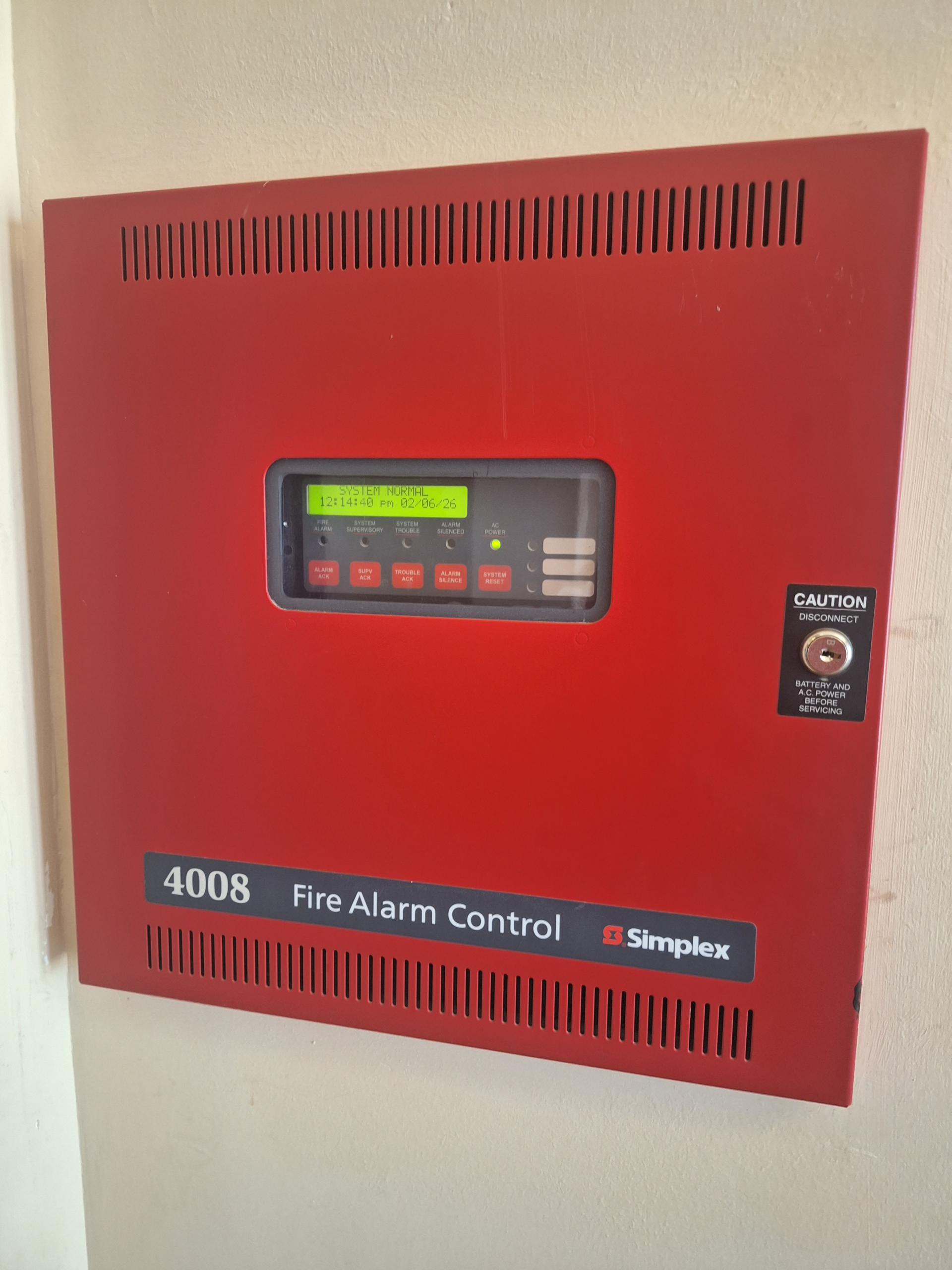

If you manage a mid-rise in The Domain or a converted warehouse near the Austin-Bergstrom International Airport, you know the sound. That rhythmic, persistent chirp coming from your Fire Alarm Control Panel (FACP). It’s enough to drive your tenants crazy.
But that chirp is more than just noise. In the City of Austin, that beep is a signal that your building may no longer be in compliance with the 2021 International Fire Code (IFC) and local amendments.
If the Austin Fire Department (AFD) walks in for a baseline inspection and sees a specific amber LED lit on your panel, you aren’t just looking at a repair bill. You could be facing potential fines or a mandatory “Fire Watch” requirement that can cost thousands of dollars a day.
Here is exactly why your fire alarm is beeping and how to resolve it before it becomes a liability.
1. Understanding the “Trouble” Signal
When your panel beeps, it is usually indicating a Trouble Signal. It is critical to know the difference between the three main signals:
- Alarm Signal: (Sirens/Strobes) There is a fire or emergency.
- Supervisory Signal: Something is wrong with a specific system, like a closed sprinkler valve or low pressure.
- Trouble Signal: The system itself has a malfunction or power issue.
Common Causes for Trouble Lights in Austin Buildings:
- Failed Backup Batteries: This is the #1 cause. While batteries are rated for 3–5 years, the extreme heat variance in Texas often shortens their lifespan. If your building on South Congress has historically poor insulation, those batteries degrade faster. Open the panel cabinet and check the date code on the batteries; if they are approaching 3 years old, they likely need immediate replacement.
- Ground Faults: This occurs when a bare wire touches a metal conduit or junction box. In older buildings on 6th Street, we often see this caused by renovation damage or settling. In warehouse districts, we also see ground faults caused by rodents chewing wires or condensation buildup in the conduit during humid Austin mornings.
- Device Malfunction & Dirt: Construction dust from Austin’s endless development is a major enemy of smoke detectors. If a detector acts up, it may be “dirty” or “drifting.” Note: Detectors don’t just need checking at 10 years; they require regular sensitivity testing per NFPA 72 to ensure they aren’t triggering false alarms.
- Communication Failure: If you’ve recently switched from landlines to VoIP or 5G cellular, your panel might be “beeping” because it can’t dial out to the monitoring center. The City of Austin requires reliable dual-path communication.
2. The Risk of Ignoring the Beep
In Austin, “ignoring it” isn’t an option. Under NFPA 72 and local municipal codes, property owners are responsible for maintaining a fully functional fire signaling system 24/7.
NFPA 72 – Inspection, Testing, and Maintenance: “The property or building or system owner… shall be responsible for inspection, testing, and maintenance of the system.”
The “Red Tag” Reality
If an AFD inspector sees a “Trouble” condition on your panel, they may issue a deficiency notice. If the issue compromises the system’s ability to detect a fire, your building can be Red Tagged. A red tag on your fire alarm or commercial fire sprinkler system leads to:
- Mandatory Fire Watch: You must hire personnel to walk the floors continuously until the system is repaired.
- Increased Liability: If a fire occurs while the panel is in “Trouble” mode, your insurance provider may contest the claim.
- Tenant Dissatisfaction: High-value tenants in Round Rock or the Pflugerville tech corridors expect a building that is safe and professional, not one with a persistent buzzing in the lobby.
3. Immediate Steps for Property Managers
When the beeping starts, follow this checklist to stay compliant with Austin Fire Department standards:
- Check the Display: Look at the LCD screen on your Fire Alarm Control Panel. It will usually specify the zone and the type of error (e.g., “Zone 4 – Low Battery” or “NAC 2 Open”).
- Silence (But Don’t Reset): You can hit the “Acknowledge” or “Silence” button to stop the noise, but do not try to reset the system if a hard fault exists. You need that error code visible for your service technician.
- Call for a Professional Fire Alarm Inspection: In Austin, internal repairs must be performed by a licensed technician holding a Texas Fire Alarm License (FAL).
4. Integrated Fire Protection: Beyond the Panel
A beeping panel is often a symptom of a larger maintenance gap. At Firetrol Protection Systems, we see a direct correlation between neglected panels and other lapsed safety systems.
When we deploy a technician for a fire alarm inspection in Austin, we highly recommend a full compliance review of your other life safety systems, including:
- Commercial Fire Sprinkler Repair: Ensuring backflow preventers and tamper switches aren’t sending false supervisory signals.
- Fire Extinguisher Service: Verifying tags are current (annual requirement) and pressure gauges are in the green.
- Emergency Lighting: Ensuring your exit signs will actually illuminate during a power outage.
5. How Firetrol Simplifies Your Compliance
We know property managers in Dripping Springs, Austin, and Georgetown are juggling dozens of vendors. You don’t have time to chase down three different companies for alarms, sprinklers, and extinguishers.
By partnering with a local expert who understands the specific nuances of the Austin Fire Marshal’s requirements, you move from “reactive” repairs to “proactive” compliance. We don’t just stop the beeping; we ensure your documentation is audit-ready for your next annual inspection.
Stop the Beeping. Start the Compliance. Don’t wait for a surprise inspection or a tenant complaint. Whether you’re dealing with a legacy system in Downtown Austin or a brand-new installation, Firetrol has the expertise to clear the trouble light for good.
Leave a Reply