
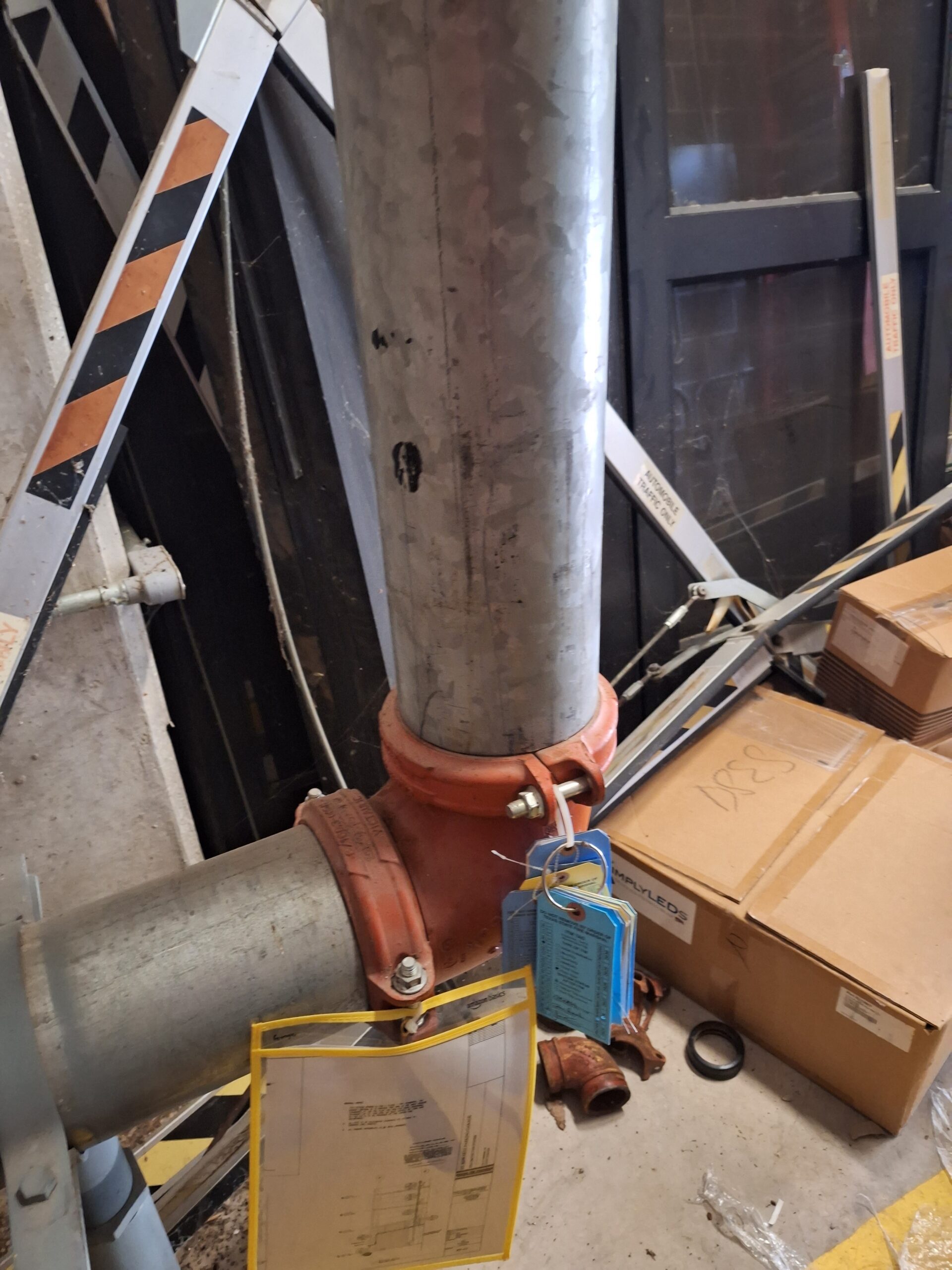
Even if your commercial fire sprinkler system passes its annual visual inspection perfectly, the State of Texas and the local Austin Fire Department Marshal require a mandatory NFPA 25 internal pipe inspection every five years.
Why? Because an annual inspection only confirms that the outside of your system is intact and your valves are functioning. The 5-year inspection is the only way to ensure the inside of your pipes isn’t rotting away from microbiologically influenced corrosion (MIC) or choking on thick, black sludge.
In this post, we are going to explain the gross, unseen threats hiding inside your sprinkler pipes, how to check if your building is due for its 5-year deep dive, and why passing an annual visual inspection doesn’t mean your system is actually ready for a fire.
The “Artery Plaque” of Fire Sprinkler Systems
Property managers are often frustrated when we tell them it’s time for their 5-year inspection. They usually ask, “Our inspector just signed off on our annual visual inspection last month. Why do we suddenly need to drain the system and open up the pipes?”
Think of your fire sprinkler pipes like the arteries in a human body. You might look perfectly healthy on the outside, and your resting heart rate (the annual visual inspection) might be completely normal. But, if your arteries are slowly clogging with plaque, you are a ticking time bomb for a heart attack.
In your commercial sprinkler system, that “plaque” is a nasty combination of rust, mineral deposits, and living bacteria. Because the water inside your sprinkler pipes sits completely stagnant for years at a time, it becomes the perfect breeding ground for unseen blockages.
The Threat of MIC and Commercial Sprinkler Corrosion
The biggest threat hiding inside your pipes is a phenomenon known as MIC (Microbiologically Influenced Corrosion).
This is not standard rust. MIC is a living, metal-eating bacteria that thrives in stagnant water environments. As the bacteria colonize inside your steel pipes, they create localized pitting and massive build-ups of biological sludge.
This creates two catastrophic problems for property managers:
- Pinhole Leaks: MIC eats through the pipe wall from the inside out. By the time you notice a small water stain on your ceiling tiles, the integrity of the entire pipe system has already been compromised.
- Clogged Sprinkler Heads: If a fire breaks out and the system activates, a massive rush of pressurized water shoots through the pipes. This current rips the heavy MIC sludge off the pipe walls and pushes it directly into the tiny orifices of your fire sprinkler heads, clogging them instantly and rendering the system useless.
Is Your Building Due for a 5-Year Deep Dive?
Don’t wait for a pinhole leak to flood your commercial space or a failed inspection to trigger a city fine. We handle the draining, scoping, and refilling of your system with minimal disruption to your tenants. Schedule Your 5-Year Inspection Today
How to Tell When Your 5-Year Inspection is Due
If you have recently taken over a property or inherited a disorganized maintenance log, it can be difficult to know where you stand on the 5-year cycle. Fortunately, there are three easy ways a building manager can verify their status:
- Check the Riser Tags: Go to your main fire sprinkler riser room. There should be service tags hanging from the main control valves. The inspector uses a hole punch on these tags to indicate what type of service was performed (Annual, 3-Year, or 5-Year) and the date it was completed.
- Look at the Installation Date: If you manage a newer building, look at the original installation date on the sprinkler system’s hydraulic calculation plate (usually mounted on the riser). Your first internal inspection is due exactly five years from that date.
- Review Your Past ITM Reports: Your past Inspection, Testing, and Maintenance (ITM) reports will explicitly state when the last internal inspection was conducted. If you can’t find these, your previous fire protection vendor or the local Austin fire marshal’s office will have a record.
Conclusion: Don’t Let Your System Rot from the Inside Out
So, why do you need a 5-year internal pipe inspection if your sprinklers pass annually? Because visual inspections cannot spot the metal-eating bacteria, rust, and sludge silently choking your pipes. An NFPA 25 internal pipe inspection is your only defense against commercial sprinkler corrosion, pinhole leaks, and system failures.
5 Frequently Asked Questions About Internal Pipe Inspections
1. What exactly is an NFPA 25 internal pipe inspection? It is a code-mandated procedure conducted every five years where life safety technicians drain a portion of your fire sprinkler system, open the pipes at specific flushing connections, and physically inspect the interior for blockages, sludge, and corrosion.
2. How do I know when my 5-year sprinkler inspection in Austin is due? You can determine your due date by checking the punched inspection tags hanging on your main fire sprinkler riser, reviewing your previous annual compliance reports, or checking the original installation date if it is a newer building.
MIC stands for Microbiologically Influenced Corrosion. It is a biological process where living bacteria in the stagnant water of your sprinkler pipes eat away at the metal, causing pinhole leaks and creating thick sludge that can clog sprinkler heads during a fire.
Yes. To safely open the pipes and inspect the interior, the main water supply must be temporarily shut off and the system must be drained. A professional fire protection company will coordinate this to minimize downtime for your building.
If significant sludge, rust, or MIC is discovered, the inspector will likely recommend a comprehensive system flush to clear out the debris. In severe cases of corrosion where the pipe walls are dangerously thin, section replacements may be required to prevent sudden water damage.