
Did you just take over a property management contract in The Domain and realized the life safety binder remains completely empty. Alternatively, maybe you manage an older building on 6th Street and recently received a violation notice for something that you didn’t even know could be a violation.
Failing a baseline inspection is a massive nightmare. Specifically, a red tag on your sprinkler system can shut your business down. Consequently, it halts daily operations and sends commercial tenants packing.
In Austin, hoping for the best is never a good strategy. Instead, you need a rock-solid Inspection, Testing, and Maintenance (ITM) program. By maintaining good disciplined maintenance on your fire equipment, you’ll not only keep your property protected, but you’ll also get a longer life span out of your fire alarm equipment.
As a property manager, you are legally responsible for building compliance. Therefore, you must follow the 2021 International Fire Code (IFC) and NFPA 72. Here is exactly how to design an ITM program that will keep your property safe and compliant.
The Legal Reality of Austin Fire Department Compliance
According to NFPA 72 Section 14.2.3.1, the building owner remains legally responsible for inspection, testing, and maintenance. Therefore, the liability rests squarely on the owner. You cannot simply assume a tenant will handle the maintenance.
There is a legal way to shift this burden however. Under NFPA 72 Section 14.2.3.2 it states that owners can delegate this responsibility. You can transfer it to the occupant or management firm, but you must execute this delegation through specific lease provisions. If you manage a warehouse near the airport, verify your lease agreements explicitly state who holds ITM responsibility. Otherwise, the city is going to hold you accountable.
Property Level Inspections: On-Site Staff Duties
You do not need a state license to perform basic visual inspections. Anyone can do them. Make sure to train your facility managers or maintenance technicians to handle frequent compliance checks. Building a reliable ITM program requires a strict schedule. Have them get used to walking the property and looking for things that look out of the ordinary.
- Daily Visual Checks: Your on-site staff must check the main Fire Alarm Control Panel daily. Specifically, they need to look for a solid green light. If they see a yellow trouble light, they must report it immediately.
- Monthly Extinguisher Checks: A licensed vendor must service your units annually. However, your staff must visually inspect them every 30 days. They must verify the extinguisher’s location, pressure gauge, and safety pin.
- Monthly Sprinkler Visuals: Your team must visually inspect the gauges on your pipe systems monthly. Additionally, they should verify that all control valves remain open and secure.
Documenting these internal checks is almost as important as doing the checks themselves. If the Austin Fire Department asks for your logs, you must have them ready. Otherwise, you will face an uphill battle regarding your Austin Fire Department compliance status.
Professional Testing: Your Fire Alarm Inspection Checklist
Visual checks are just the beginning. The 2021 IFC mandates specialized testing exclusively by licensed technicians.
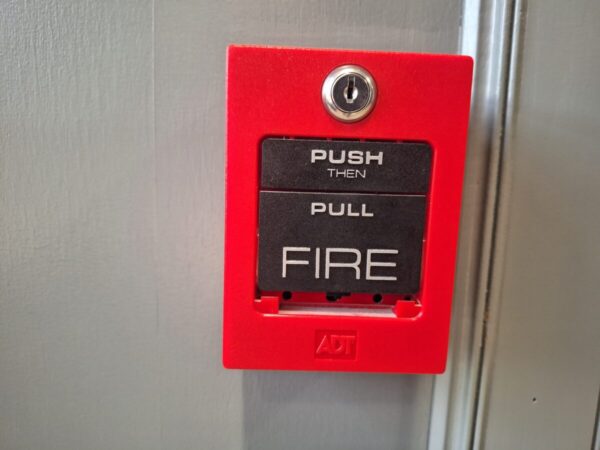
- Annual Fire Alarm Testing: Once a year, professionals must physically test every initiating device in your building. A licensed technician uses specialized equipment to test smoke detectors and pull stations.
- Annual and Multi-Year Sprinkler Inspections: Your sprinkler system requires a rigorous professional inspection annually, but, specialized tests like the 5-year internal pipe inspection still remain mandatory. If your property is overdue, you must schedule a professional visit immediately.
- Annual Fire Extinguisher Certification: A licensed professional must inspect, test, and re-tag every fire extinguisher annually. Depending on unit age, they may also require specialized hydrostatic testing.
Pro Tip: Do not rely solely on a physical ITM binder. Instead, keep a scanned, digital backup of all inspection reports. This way, you can simply pull the digital compliance records up on your phone during an unannounced visit.
Vendor Consolidation: Stop Juggling Contractors
Many property managers assume new construction guarantees compliance. Unfortunately, it absolutely does not. Rapid development often leads to poorly maintained systems and frequent false alarms. On the flip side, managers of the older building near Austin’s 6th street struggle with legacy systems that require constant troubleshooting.
It is easy for a Property Manager to waste countless hours coordinating different vendors. Specifically, aligning separate companies for fire alarms, sprinklers, and extinguishers creates a massive headache.
By working with vendors who can handle everything under one roof, you’ll save yourself a lot of time and frustration.
5 Frequently Asked Questions About Fire Compliance
- What is an ITM program in fire safety? An ITM program stands for Inspection, Testing, and Maintenance. Specifically, it is a structured schedule required by the fire code to ensure your life safety systems function perfectly.
- Who is legally responsible for fire alarm inspections in Austin? According to NFPA 72, the building owner remains legally responsible for fire system maintenance. However, owners can officially delegate this liability to tenants through specific lease agreements.
- How often should I check my fire alarm panel? Property managers must perform daily visual checks of their fire alarm control panel. Specifically, on-site staff should look for a solid green light and report any yellow trouble signals immediately.
- Do I need a licensed technician for monthly fire extinguisher checks? No. Your in-house maintenance staff can perform monthly visual checks. However, the state of Texas requires a licensed fire protection contractor for the comprehensive annual inspection.
- Why should I consolidate my fire inspection vendors? Consolidating vendors eliminates the massive headache of coordinating multiple contractors. Therefore, using one provider for alarms, sprinklers, and extinguishers ensures unified records and prevents compliance gaps.