
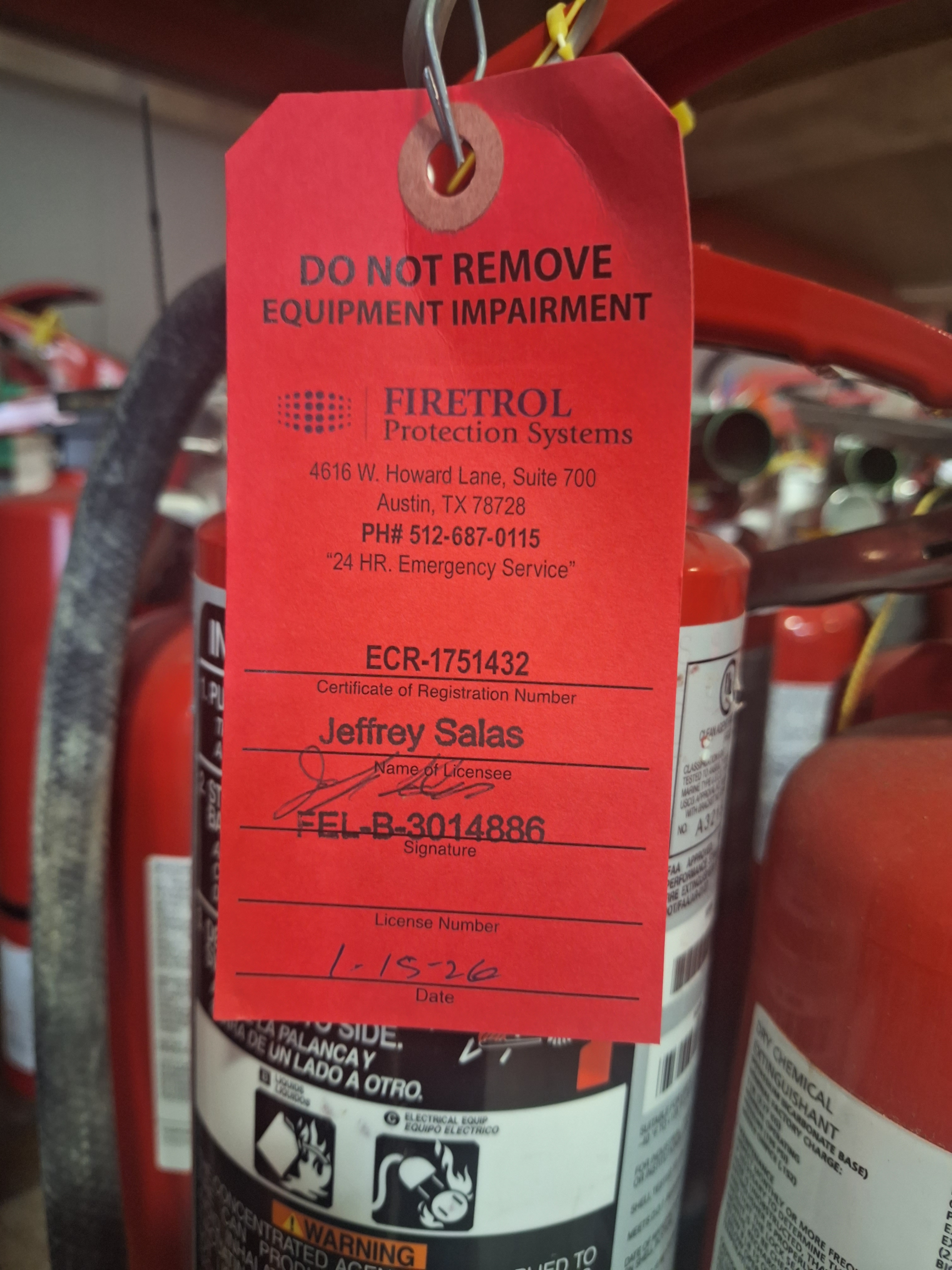
Many property managers treat commercial fire extinguishers as “set and forget” devices. Specifically, you hang them on the wall while a technician punches the paper tag annually. Consequently, you assume your building remains fully compliant.
However, that paper tag only tells part of the story. Two hidden maintenance intervals lurk beneath the surface. Therefore, these hidden deadlines can frequently catch a facility director off guard. If you rely solely on annual visual inspections, you might trust a faulty cylinder. As a result, it could fail to discharge during an actual emergency.
The Baseline: Annual Visual Inspections
Every twelve months, the local fire code requires a basic visual inspection for your portable fire extinguishers. First, a technician checks the pressure gauge and ensures the pin remains intact. Next, they verify there is no obvious physical damage to the hose or cylinder.
This guarantees the extinguisher is present and appears functional on the outside. But it absolutely does not guarantee the chemical agent inside remains viable.
The 6-Year Internal Teardown: Unpacking the “Brick”
Over time, the dry chemical powder inside a standard commercial fire extinguisher settles. Specifically, it compacts at the bottom of the cylinder. Think of it like a bag of brown sugar sitting in your pantry for years. Eventually, it turns into a solid brick.
If that powder solidifies, the nitrogen propellant simply blows right past it. Therefore, nothing happens when someone squeezes the handle.
To prevent this, safety codes mandate a complete internal inspection every six years from the manufacturing date. A technician must completely empty the cylinder and inspect the internal mechanics for corrosion. Additionally, they replace the O-rings and refill the unit with fresh, aerated chemical agent. Consequently, this resets the clock and ensures the powder will actually flow when your tenants need it most.
The 12 Year Hydrostatic Test: The Pressure Cooker
At the twelve-year mark, technicians must test the actual metal cylinder for structural integrity. Fire extinguishers are highly pressurized vessels. After more than a decade sitting in sweltering Austin parking garages, the metal can weaken.
Consequently, a twelve-year hydrostatic test involves emptying the extinguisher and filling it with water. Then, a technician pressurizes it well beyond its normal operating capacity. If the cylinder expands or leaks, we permanently condemn it. However, if it passes, technicians dry, rebuild, recharge, and return it to service for another twelve years.
Let Us Track The Compliance Details
Keeping track of these rolling expiration dates creates a massive administrative headache. As a Texas Licensed Fire Extinguisher Technician (License: FEL-B-3464192), I constantly see managers assume compliance. They see their current annual tags, but they completely miss the stamped manufacturer date. Furthermore, missing a 6-year or 12-year interval guarantees a deficiency notice from the Austin Fire Department.
You have enough on your plate without tracking fifty different steel cylinders. Simply grab your smartphone and take a quick photo of the physical tag. Also, snap a picture of the bottom metal rim. Finally, upload the photos to us. I will review the dates and let you know exactly where you stand.
5 Frequently Asked Questions About Fire Extinguishers
- What is a 6-year fire extinguisher internal inspection? Safety codes mandate a complete internal inspection every six years. First, a technician completely empties the dry chemical fire extinguisher. Next, they inspect the cylinder for internal corrosion. Finally, they refill it with fresh, aerated chemical powder. Consequently, this ensures the powder does not solidify into a brick over time.
- What is a 12-year hydrostatic test for fire extinguishers? At the 12-year mark, a technician completely empties the metal cylinder. Next, they fill the extinguisher with water. Then, they pressurize it well past its normal capacity. Ultimately, this stress test verifies the metal’s structural integrity. Therefore, it ensures the cylinder will not rupture under pressure.
- Can I fail an Austin fire inspection if my annual tags are current? Yes, you can absolutely fail. For example, your annual visual inspection tag might be current. However, you might miss the mandatory 6-year internal teardown or 12-year hydrostatic test. Technicians base these tests on the manufacturer date stamped into the cylinder. Consequently, the local fire marshal will issue a deficiency notice.
- How much does a fire code violation cost in Austin? Initially, minor citations start small. However, the real financial burden comes from mandatory municipal reinspection fees. Furthermore, you face massive liability if a fire happens before you fix the issue. Specifically, your insurance company could deny your commercial claim.
- Do I need a licensed contractor to pass an Austin fire inspection? Yes, you absolutely need one. Typically, property managers handle daily housekeeping and egress maintenance. However, you must hire a licensed fire protection contractor for compliance. Specifically, they must perform the mandatory annual testing and tagging of your physical systems.