
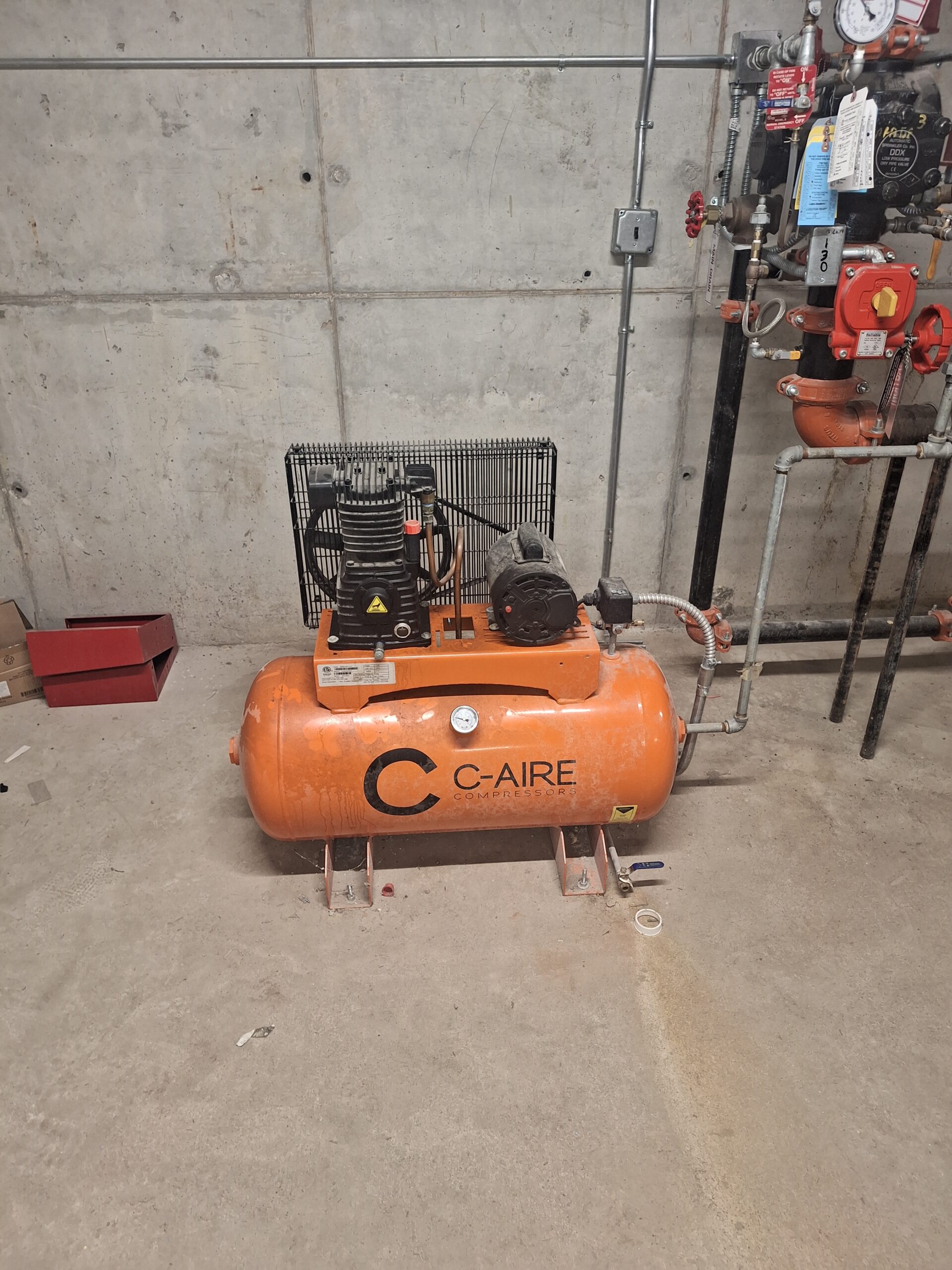
An annual fire pump test in Austin is a mandatory, full-scale inspection where a licensed fire protection technician runs your building’s fire pump under full load to ensure it can successfully deliver the required water flow and pressure during an actual fire emergency.
In this blog post, we are going to discuss the vital differences between weekly checks and your annual flow test, what exactly inspectors look for during the test, and why staying on top of this testing is critical for high-rises and industrial facilities to maintain compliance.
The True Cost of Skipping Commercial Fire Pump Maintenance
If you manage a high-rise downtown or a massive distribution warehouse near ABIA, your fire pump is the beating heart of your life safety system. City pressure alone is rarely enough to push thousands of gallons of water up 20 stories or across a million-square-foot warehouse ceiling. If a fire breaks out and your pump fails to engage, the entire sprinkler system is rendered useless.
Consistent commercial fire pump maintenance Travis County facility managers can rely on goes far beyond just glancing at a pressure gauge. While building maintenance personnel often perform quick, weekly “churn” tests (running the pump without flowing water) to ensure the engine turns on, the annual test is entirely different. The annual test is a high-stress diagnostic exam for your pump. Failing to perform this test not only puts lives at risk but also exposes property owners to massive liability and potential voiding of their commercial property insurance.
Breaking Down an NFPA 20 Fire Pump Inspection
When a professional fire inspection team arrives at your property, they have to follow strict national guidelines. An NFPA 20 fire pump inspection is dictated by the National Fire Protection Association’s standard for the installation and maintenance of stationary pumps.
During a fire pump flow test Austin inspectors will physically hook up specialized fire hoses to the test header on the outside of your building or pump room. They will safely divert this water to a drainage area and throttle the pump to three specific performance benchmarks:
- Churn (No Flow): Testing the pump’s pressure when running but not pushing water.
- 100% Rated Capacity: Ensuring the pump delivers its exact manufactured specification for gallons per minute (GPM).
- 150% Peak Load: Pushing the pump to 150% of its rated capacity to ensure it doesn’t fail under extreme demand.
While the water is flowing, inspectors take exact readings of the RPMs, voltage, amperage, and suction/discharge pressures to ensure the pump’s electrical or diesel motor is operating perfectly without overheating or dropping voltage.
Conclusion: What is Required for Annual Fire Pump Testing in Austin?
So, what is required for annual fire pump testing in Austin? An annual fire pump test requires a licensed fire protection contractor to perform a full-scale flow test, routing water through test headers to measure RPM, voltage, and discharge pressure, proving the pump meets its rated capacity to safely supply your building’s fire sprinklers.
5 Frequently Asked Questions About Fire Pump Flow Tests
1. How often is a fire pump flow test required in Austin?
A full flow test is required annually by local fire code and NFPA 25/20 standards. However, the pump itself should be briefly run (a “churn” test) every week or month depending on whether it is a diesel or electric model.
2. What is an NFPA 20 fire pump inspection?
This is an inspection conducted strictly according to the National Fire Protection Association (NFPA) Standard 20, which dictates exactly how stationary fire pumps must be tested, including the required flow benchmarks at 100% and 150% capacity.
3. Who can perform commercial fire pump maintenance in Travis County?
Only highly trained, licensed fire protection technicians should perform the annual flow test and ongoing maintenance. General plumbers or standard building maintenance staff are not certified to sign off on annual fire pump compliance.
4. Will an annual fire pump flow test flood my property?
No. Professional inspectors use specialized hoses connected to a test header to safely route thousands of gallons of water away from your building and into designated storm drains or safe runoff areas.
5. What is Required for Annual Fire Pump Testing in Austin? To quickly recap, an annual fire pump test in Austin requires a licensed inspector to physically flow water through the pump to test its performance at 0%, 100%, and 150% capacity, ensuring the engine or motor operates flawlessly under emergency stress.