
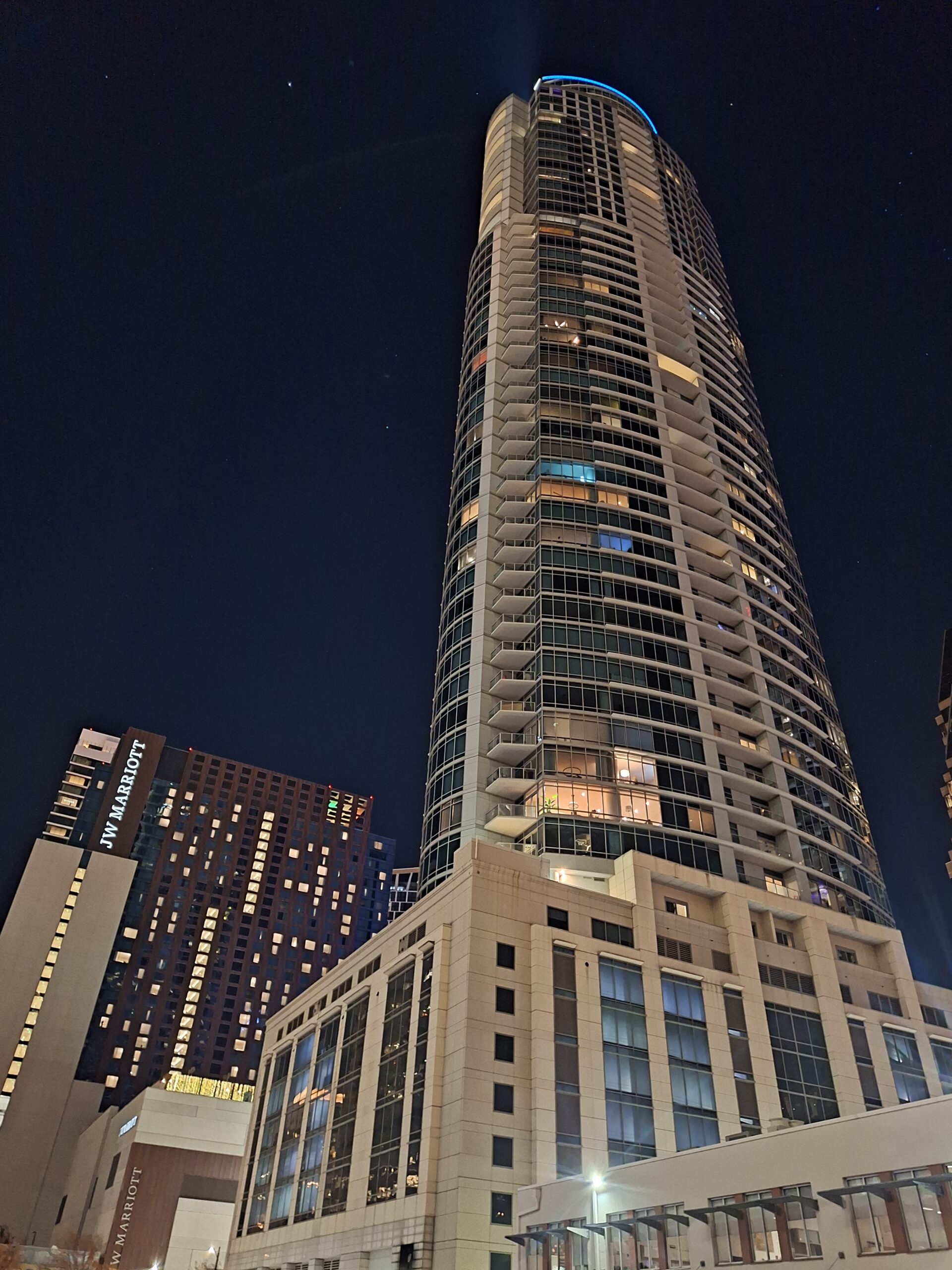
The short answer is Yes. If your new commercial building or major remodel blocks police and fire department radio signals, you are legally required to install an ERCES (Emergency Responder Communications Enhancement System) to get your Certificate of Occupancy.
In this post, we will explain exactly how modern construction creates radio dead zones, break down the strict new fire codes that are being enforced across Central Texas, and show you how to navigate your required benchmark testing to keep your project on schedule.
The “Dead Zone” Problem: Why Modern Buildings Block Radios
Have you ever gone shopping and noticed that you can’t seem to keep a signal inside of the superstores? New construction is excellent for energy efficiency, but it is terrible for radio waves. The thick concrete tilt-walls, heavy steel framing, and Low-E window glass used in modern Austin and Round Rock developments act like a fortress against RF (radio frequency) signals. The deeper you get into a building, the worse that this problem becomes.
If a fire breaks out or a medical emergency occurs, first responders rely on their two-way radios to coordinate their response. If they walk into a lobby or stairwell and their radios go completely dead, it creates a massive life safety failure and put people’s lives at risk. Because of this, local fire marshals have actively begun enforcing in-building radio coverage requirements, before they will let anyone move into a new space.
The Certificate of Occupancy Trap: IFC 510 & NFPA 1225
For years, fire marshals only checked your fire sprinklers and alarms. Now, under the International Fire Code (IFC 510) and the strict NFPA 1225 compliance Travis County enforces, they are testing your airwaves.
When you apply for a Certificate of Occupancy (C of O), the local Authority Having Jurisdiction (AHJ) requires hard proof that emergency radios work inside your building. The standard code requires you to prove 95% signal coverage in general building areas and 99% coverage in critical areas like stairwells, fire pump rooms, and elevator shafts. If your building fails to meet these numbers, your C of O will be denied until the issue is fixed.
How to Prove Compliance: The BDA Grid Test
The good news is that you do not automatically have to buy an expensive radio system just because you built a new structure. First, you have to find out if your building passes or fails naturally on its own. This is done through a benchmark RF survey, (commonly known as a BDA grid test) that the Austin fire marshals require.
To conduct the test, a licensed technician walks your floor plan, dividing it into a 20-foot or 40-foot grids, and then they measure the exact signal strength in each square using a specialized spectrum analyzer. It might sound like a device out of Ghostbusters, but a spectrum analyzer allows them to see how strong the radiowaves are around them.
- If you pass: Your technician will submit the passing RF survey report to the local fire marshal, and you check an important box towards getting your C of O.
- If you fail: You are legally required to install a Bi-Directional Amplifier (BDA) and a Distributed Antenna System (DAS) to fix the dead zones.
What Actually is an ERCES?
If your building fails the grid test, an ERCES fixes it. The setup involves three main components:
- The Donor Antenna: We install an antenna on your roof to catch the public safety radio signal directly from the local dispatch tower.
- The BDA (Bi-Directional Amplifier): That signal is fed down into a heavy-duty hardware panel mounted inside your electrical room.
- The DAS (Distributed Antenna System): The boosted signal is pushed through a network of specialized cables and small indoor antennas hidden in your ceilings, completely covering the dead zones.
Conclusion: Are In-Building Radio Systems Mandatory?
Yes. If your building’s construction materials block emergency radio signals, local fire codes strictly require you to install an ERCES. You cannot get your Certificate of Occupancy in Travis County or Williamson County without passing a benchmark grid test or installing a compliant BDA system.
5 Frequently Asked Questions About Radio Coverage
1. What are the in-building radio coverage requirements in Texas?
Under IFC 510 and NFPA 1225, commercial buildings must provide 95% radio signal coverage in general areas and 99% coverage in critical life-safety areas like stairwells and basements.
2. How do I pass a BDA grid test Austin?
A licensed technician will map your building and test the public safety radio frequencies in each grid square. If the natural signal drops below the required threshold, you must install a BDA system to pass the test and satisfy the fire marshal.
3. Who handles ERCES installation Round Rock?
Austin Fire Inspections provides complete ERCES and BDA system design, grid testing, and installation for commercial properties in Round Rock, helping you pass your final fire marshal walkthrough without delays.
4. What does NFPA 1225 compliance Travis County mean for my remodel?
If you are doing a major tenant improvement or changing the occupancy classification of a building, Travis County fire marshals will likely require you to update your life safety systems. This now includes verifying your emergency responder radio coverage with a benchmark test.
5. What is the difference between a BDA, DAS, and ERCES?
ERCES (Emergency Responder Communications Enhancement System) is the official code name for the entire required setup. A BDA (Bi-Directional Amplifier) is the hardware panel that boosts the signal, and a DAS (Distributed Antenna System) is the network of cables and indoor antennas that spreads the signal throughout your building.