
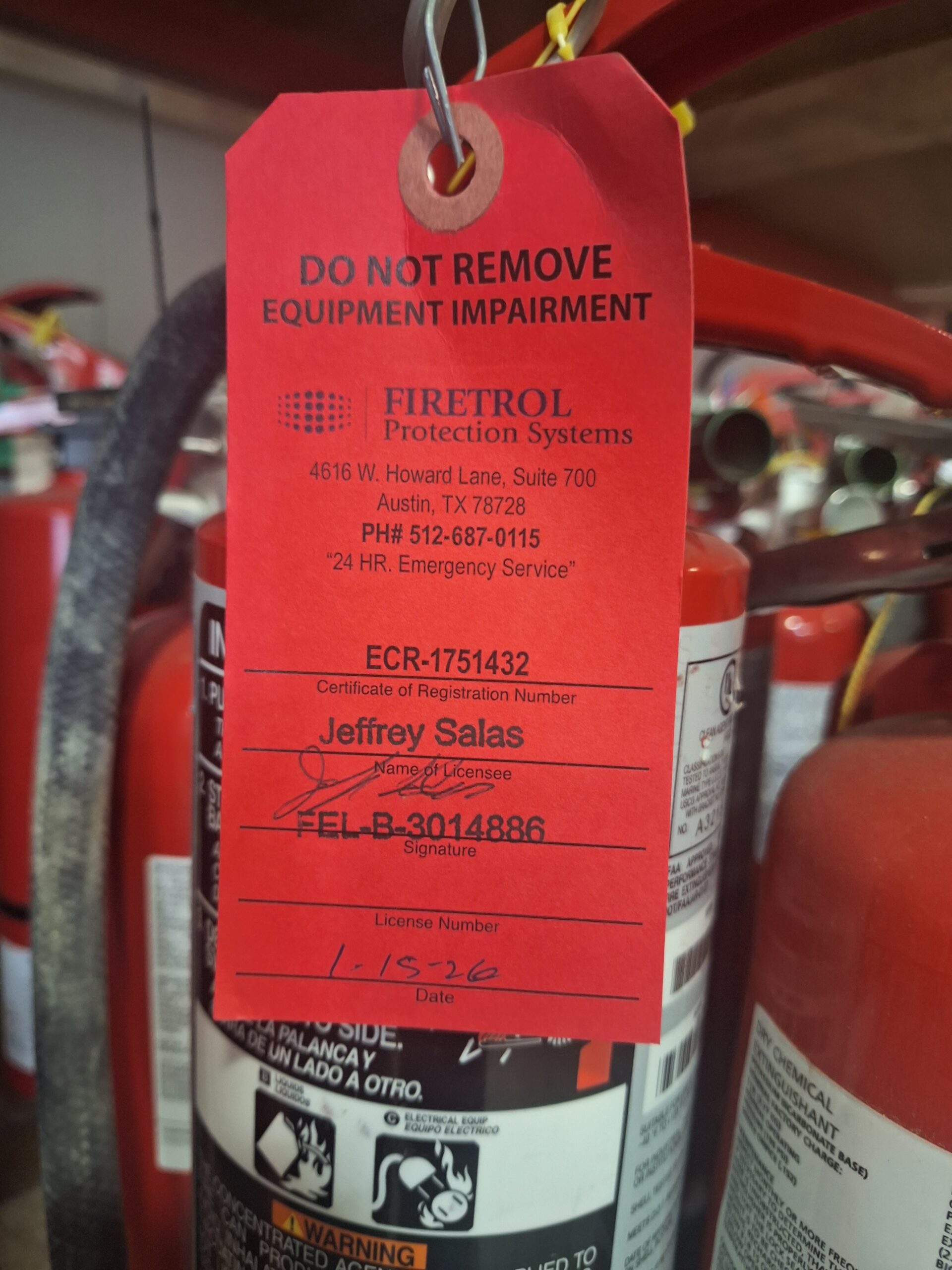
In Texas, commercial fire extinguishers require a visual check every 30 days and must be formally inspected once a year (annually) by a licensed fire protection professional. In this blog post, we will explain the differences between your monthly in-house checks, the mandatory annual certified inspections, and the long-term hydrostatic testing required to keep your building up to code.
Understanding the NFPA 10 Extinguisher Inspection Schedule
Keeping your property safe means following the timeline set by the National Fire Protection Association (NFPA). While some fire systems like fire pumps (read more: What is Required for Annual Fire Pump Testing in Austin?) have complex full-load testing requirements, portable fire extinguishers follow a simpler, but equally strict schedule under NFPA 10.
Here is what is required for your commercial fire extinguishers:
- 30-Day Visual Inspections: You or your staff must perform a quick visual check every month. This ensures the extinguisher is in its designated spot, not blocked by furniture or inventory, and that the pressure gauge needle is in the green zone. You sign the back of the tag to record this check.
- 1-Year Certified Inspections: Every 12 months, a licensed technician from a Texas State Fire Marshal’s Office (SFMO) certified company must perform a thorough inspection of the cylinder, seals, hoses, and mechanical parts. They will issue a new official compliance tag.
- 6-Year Internal Maintenance: For standard stored-pressure extinguishers (like ABC dry chemical), the unit must be emptied and internally inspected every six years.
- 12-Year Hydrostatic Testing: Every 12 years, the empty cylinder is pressure-tested with water to ensure the metal has not weakened over time.
Avoid Fire Marshal Violations
When the local fire marshal visits your property, they won’t just look at your panel or whether you have proper access outside (read more: The Knox Box & FDC Clearance Trap: Pass Your Exterior Fire Inspection). They will immediately check the physical tags hanging on your extinguishers.
If your tags are expired, punched incorrectly, or missing, you will be issued a code violation. For Austin businesses and restaurants, staying compliant doesn’t have to be complicated. You can Get Your Free Estimate Now and let our licensed technicians handle your tagging and maintenance schedule.
Conclusion
So, how often do commercial fire extinguishers need to be inspected in Texas? While you must visually check them every 30 days in-house, state law and NFPA 10 require a complete, certified inspection by a licensed professional once every year. Following this schedule guarantees your equipment will function when an emergency strikes and prevents costly citations.
Frequently Asked Questions
Can I do my own annual fire extinguisher inspection in Austin?
No. While anyone on your staff can (and should) perform the monthly visual check and initial the back of the tag, the annual inspection must be performed by a technician working for a company licensed by the Texas State Fire Marshal.
How much does an annual fire extinguisher inspection cost in Texas?
Costs typically range from $10 to $20 per unit for the standard annual check, depending on the volume of extinguishers on your property. Units requiring 6-year maintenance or 12-year hydrostatic testing will incur additional fees.
What happens if my fire extinguisher fails the annual inspection?
If an extinguisher fails due to a loss of pressure, a broken seal, or a damaged hose, the technician will either recharge and repair the unit on-site or recommend completely replacing the extinguisher if it is beyond repair or past its 12-year lifespan.
What do the dates punched on my fire extinguisher tag mean?
The holes punched into your official Texas compliance tag indicate the exact month and year that the certified annual inspection was performed. The extinguisher will be due for its next inspection exactly one year from that punched date.
How often do commercial fire extinguishers need to be inspected in Texas? In Texas, commercial fire extinguishers must be visually inspected every 30 days and receive a full, certified inspection by a licensed professional every 12 months (annually).